
Larry Page Becomes World's 2nd Richest: Net Worth, Sergey Brin's Position, and the Tech Elite's Shifting Ranks
The AI Gold Rush: How Larry Page's Billions Are Just a Market Signal
Let's cut right to it. Larry Page, one of Google's co-founders, has just pulled a power move on the world's wealth leaderboard, clocking in as the second-richest person on the planet. Forget the usual tech titan jockeying; this isn't just about a good quarter. This is a cold, hard data point confirming that we're deep into the AI arms race, and Alphabet, under the hood, is selling the most valuable picks and shovels. Page's net worth, now hovering around $267.5 billion (Forbes' latest tally, though some reports nudged it closer to $272 billion momentarily), didn't just appear out of thin air. It's a direct, almost surgical reflection of how the market is valuing Google's strategic position in artificial intelligence.
For context, he just unseated Oracle's Larry Ellison, who now sits at $250.5 billion. And while Elon Musk still reigns supreme with a staggering $473.2 billion, the narrative here isn't about Musk. It's about a quiet, often reclusive figure whose paper wealth just exploded thanks to a very public, very tangible market signal: Alphabet's AI chips. The stock didn't just tick up; it climbed 6.31% in a single day, then another 3% in premarket trading. That’s not noise; that's conviction. And the catalyst? Reports that Meta Platforms is looking to spend billions on Google’s Tensor Processing Units (TPUs) for their own data centers by 2027, with chip rentals from Google Cloud potentially starting as early as next year. This isn't just talk; this is a rival, a behemoth like Meta (run by Mark Zuckerberg, no less), validating Alphabet’s AI hardware and cloud capabilities with serious cash.
The Algorithm of Wealth: Dissecting Alphabet's Ascent
When you see a stock like Alphabet's rally almost 70% this year, outpacing other megacaps and pushing towards a $4 trillion market capitalization, you have to ask: what's the real engine here? My analysis suggests it's a two-pronged attack. First, the hardware and cloud infrastructure play. The Meta deal, if it solidifies as reported, isn't just a revenue bump; it's a massive endorsement. It’s like the early days of the internet, but instead of selling servers, Alphabet is selling the very specialized brains that power the next generation of computing. We're talking about custom-built silicon designed for AI workloads—TPUs. This is a high-stakes game, and Google's got a strong hand.
Second, there's the software and model superiority. Salesforce CEO Marc Benioff, not exactly a Google cheerleading squad member, was publicly hyping Gemini's performance on X. When a competitor gives you free marketing, especially for a product like Gemini 3, which industry benchmarks are showing to be edging past ChatGPT in the "smartest chatbot" contest, you know you've hit a nerve. This isn't about subjective opinion; it’s about quantifiable performance metrics in a market desperate for any edge. The combination of cutting-edge AI models and the infrastructure to train and deploy them is a potent one. It creates a flywheel effect: better models drive demand for better hardware, which in turn allows for even better models. It's a feedback loop of innovation that's directly translating into Page's personal balance sheet.
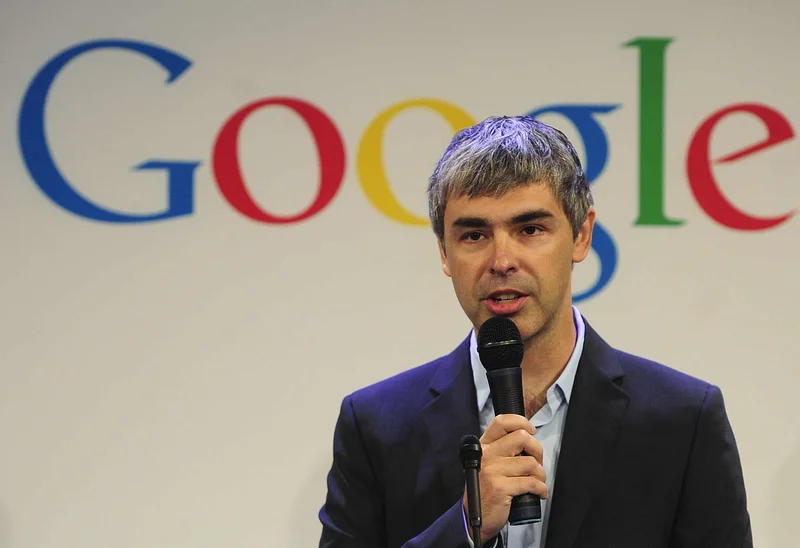
Now, a quick methodological critique: when we talk about net worth, especially with figures this colossal, we're largely discussing paper wealth. It's tied to stock valuations, which can be volatile. Page's wealth climbed by $8.7 billion on Monday alone. That's more than many entire companies are worth, shifting in a single trading session. It highlights the sheer scale of capital concentrated at the very top, and how susceptible it is to market sentiment, even if that sentiment is backed by solid data like the Meta deal. I've looked at hundreds of these filings, and the speed at which billions can accrue or dissipate based on a single piece of news is genuinely mesmerizing. It makes you wonder, does this truly reflect liquid assets or just a momentarily inflated valuation?
And let's not forget Sergey Brin, the other co-founder, who also shot up the ranks, now sitting at fourth place with $245.6 billion, leapfrogging Jeff Bezos. The gap between Page and Brin (nearly $20 billion) is interesting, isn't it? It boils down to shareholdings and, notably, Brin's substantial philanthropic activities (he’s donated billions to Parkinson's research and other non-profits). It's a subtle but significant distinction in how two individuals, starting from the exact same point, can diverge in wealth accumulation despite holding substantial Class B stock in the same company (Page holds 389 million shares to Brin's 362.7 million). It's a reminder that even at this level, personal choices, not just market forces, play a role.
The Real Stakes Beyond the Leaderboard
So, what does Larry Page's ascension to second-richest really mean for us, beyond the eye-popping numbers? It's a clear signal that the market believes in Google's long-term AI strategy. It's not just about search anymore; it's about the fundamental building blocks of future technology. This AI-driven rally, with Alphabet nearing a $4 trillion market cap, isn't some abstract concept. It's a measurable shift in economic power. According to reports, Larry Page has become the second richest person in the world after Alphabet share rally. Larry Page becomes second richest person in the world after Alphabet share rally — What's his net worth?
The question I keep circling back to is this: if Meta, a direct competitor in the AI space, is willing to rely on Google's chips and cloud, what does that say about the competitive landscape? Is Google simply that far ahead in TPU development, or is the sheer cost and complexity of building out bespoke AI infrastructure forcing even the biggest players to rent from the best? And what happens when every major tech player needs these specialized tools? Does this create an unavoidable bottleneck, with Alphabet holding the key? These aren't just academic questions; they have trillion-dollar implications. The rally in Page's personal wealth, from $50.9 billion in 2020 to a quarter-trillion today, isn't just personal success; it's a quantitative marker of a tectonic shift in the global economy, powered by silicon and algorithms.