
Larry Page Becomes World's Second-Richest Person: Net Worth, Sergey Brin, and the Race for Tech Dominance
The AI Tsunami: Larry Page's Surge and the Dawn of a New Economic Era
Forget the usual market chatter for a moment. What happened this week isn't just another reshuffling of the world's richest list; it's a seismic event, a clear and undeniable signal of where the future's true value lies. When Larry Page, co-founder of Google, leapfrogs Larry Ellison to become the world's second-richest person, it's not just about a few extra zeros in a bank account. It's about the Alphabet Inc. machine, powered by relentless AI innovation, hitting a new gear, and dragging the entire tech landscape into a future we've only just begun to imagine.
You see, the numbers are staggering, almost too big to truly grasp. On Monday alone, Page's net worth spiked by nearly $9 billion, pushing him past the quarter-trillion-dollar mark. By Tuesday, it was even higher, with some estimates placing his fortune north of $270 billion, trailing only Elon Musk. And his partner in digital crime, Sergey Brin, isn't far behind, having surged past Jeff Bezos to become the world's fourth-richest person. This isn't just growth; it's an explosion, a testament to what happens when foundational technology reaches an inflection point.
The Tides of Innovation Are Turning
Let's break down the mechanics, because this isn't magic, it's brilliant engineering and visionary strategy. Alphabet shares have been on an absolute tear, rallying almost 70% this year. We saw a 5.8% jump on Monday, pushing the stock to around $317, and it continued to climb on Tuesday. Meanwhile, Oracle, despite Ellison's own monumental wealth, saw its shares dip, a stark contrast that tells its own story. The primary engine behind this incredible surge? Artificial Intelligence, pure and simple.
When I first saw the reports of Alphabet's stock accelerating, especially after their Gemini 3 model started outperforming rivals like ChatGPT in industry benchmarks, I honestly just sat back in my chair, speechless. This isn't just about a better chatbot; it's about a fundamental shift in computing power and capability that's manifesting across every single facet of Google's empire. Remember when the internet itself started to reshape everything? This feels like that, but on steroids, with intelligence infused into every layer.
Think about it: who owns Google? Larry Page and Sergey Brin, through their significant stake in Alphabet. Their vision, their commitment to pushing the boundaries of what's possible with data and algorithms, is now being validated on a scale that few could have predicted. It’s like watching the first steam engine chug to life and realizing it’s not just a fancy toy, but the precursor to an industrial revolution that will completely redefine human labor and economic power. That’s where we are with AI right now, and Google, or rather Alphabet, is at the forefront of this new industrial age. The news that Meta Platforms is in talks to use Google's AI chips – their Tensor Processing Units, or TPUs, which are specialized processors for AI workloads – and even rent chips from Google Cloud, that's not just a business deal; it's a massive vote of confidence from a major competitor. It shows that Alphabet's AI infrastructure isn't just good, it's becoming the gold standard, the very bedrock upon which future AI innovations will be built.
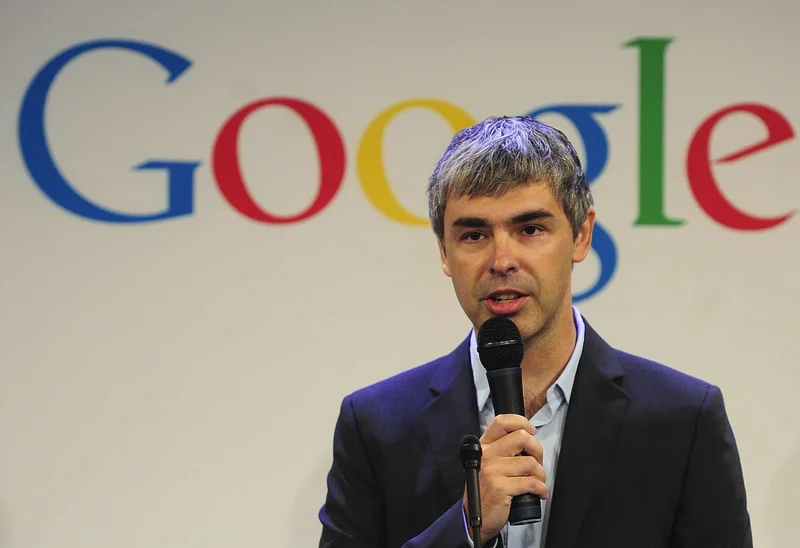
Beyond the Billions: What This Really Means for Us
Now, some might look at these astronomical figures and just see another billionaire getting richer. They might say, "What does Larry Page's net worth mean for me?" But that's missing the forest for a single, gleaming tree. This isn't just about personal wealth; it's a proxy, a powerful indicator of the monumental value being created by the AI revolution, a revolution that will touch every single one of us. Larry Page becomes second richest person in the world after Alphabet share rally — What's his net worth?
What does it mean when a company like Alphabet is on the cusp of a $4 trillion market capitalization, driven overwhelmingly by its AI and Cloud divisions? It means we're entering an era where intelligence itself becomes the most valuable commodity. It means the tools of tomorrow, the solutions to some of our most complex global challenges, are being forged right now in the crucible of these AI breakthroughs. Could AI help us crack the code on climate change? Accelerate drug discovery like never before? Transform education and access to information for billions? These aren't just hypotheticals; they're the tangible promises that this kind of financial validation suggests.
Of course, with great power comes great responsibility. As we push the boundaries of AI, we, as a society, must also ask the hard questions: How do we ensure these incredible technologies are used ethically? How do we democratize access and prevent a widening gap between those who create AI and those who merely consume it? These are the crucial conversations we must have, even as we celebrate the incredible leaps forward.
The collective excitement is palpable. I see it in forums, on social media, people are buzzing. One comment I saw recently really stuck with me: "It's not just about the numbers; it's about seeing the future unfold in real-time, knowing that the tech we dreamed of is finally here and it's only just getting started." That's the spirit we need. This isn't just a financial story; it’s a human story about ingenuity, vision, and the breathtaking pace of progress. The speed of this is just staggering—it means the gap between today and tomorrow is closing faster than we can even comprehend, and it’s a thrill to witness.